Pearl Grading Explained: AAA vs AA vs A
You have probably seen the labels: AAA freshwater pearls, AA-grade akoya, "top quality A-grade". But what do those letters actually measure — and are they worth the premium? This guide explains the A–AAA pearl grading scale, the six factors that decide a pearl's grade, and how to buy confidently without overpaying for a letter.
Pearl Grading Is Not Like Diamond Grading
Here is the first thing to know: there is no single official body that grades all pearls. Diamonds have the GIA and its universal scale. Pearls do not. The AAA–AA–A scale you see online is a commercial convention, and each seller applies it a little differently.
The one exception is Tahitian pearls, which are officially graded A through D under French Polynesian government rules — A being the finest. For everything else, "AAA" is a claim made by the seller, not a certificate. That does not make the grades meaningless — the underlying factors (lustre, surface, shape) are real and visible — but it does mean you should judge the pearls, not the letters.
The 6 Factors That Decide a Pearl's Grade
A grader evaluates each pearl, or each strand, against six qualities:
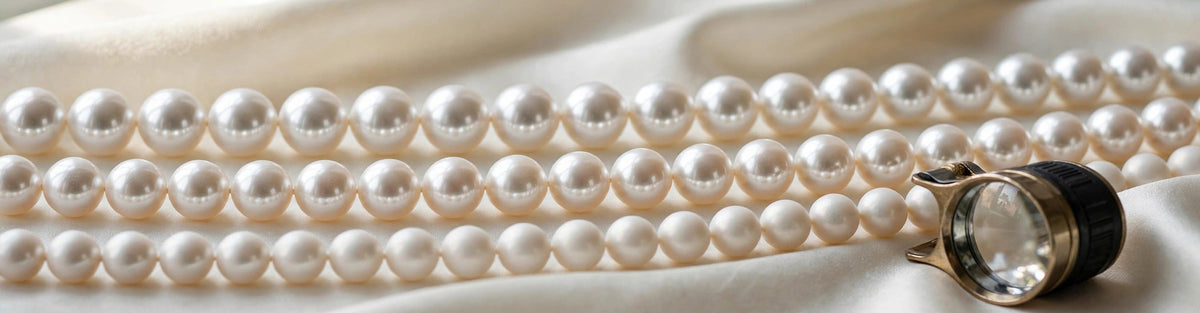
- Lustre. The most important factor. High-grade pearls have a sharp, mirror-like reflection; lower grades look soft, hazy or chalky. Lustre is what makes a pearl look alive.
- Surface quality. Almost every natural pearl has some blemishes — tiny pits, wrinkles or spots. The grade reflects what share of the surface is clean: AAA means 95% or more blemish-free.
- Shape. Perfectly round is rarest and commands the highest grade; near-round, oval, button and baroque shapes grade lower, though many buyers prefer them for character.
- Nacre thickness. The layers of nacre (mother-of-pearl) coating the pearl. Thick nacre gives deeper lustre and better durability. Freshwater pearls are usually solid nacre, which is why they wear so well.
- Colour and overtone. Body colour plus the subtle pink, green or silver overtone on the surface. A strong, even overtone is a grading plus.
- Matching. For necklaces and bracelets, how uniform the pearls are in size, colour, lustre and shape. A well-matched strand grades higher than a mixed one.

AAA vs AA vs A: What Each Grade Means
- AAA — the top commercial grade. Mirror lustre, 95%+ blemish-free surface, near-round or round shape, excellent matching. These are the pearls with the sharpest glow, and they cost the most. Some sellers add a fourth tier, "AAAA" or "Hanadama", for the absolute finest — treat any extra letters as marketing until you see the pearls.
- AA — the sweet spot. High lustre, 75%+ clean surface, round to near-round. To the naked eye at normal wearing distance, a good AA pearl looks almost identical to AAA — for noticeably less money.
- A — commercial grade. Softer lustre, 60%+ clean surface, slightly irregular shapes. Perfectly fine for casual everyday pieces, and the price reflects it.
One important nuance: the scale is applied relative to the pearl type. "AAA freshwater" means top grade among freshwater pearls — it is not the same claim as "AAA akoya", because akoya pearls are rounder and higher-lustre by nature. Comparing grades across pearl types is comparing apples to oranges.

What Grade Should You Actually Buy?
For most buyers, AA is the smart buy: excellent lustre, clean surface, round pearls, at a sensible price. Choose AAA when the piece is a statement — a wedding necklace, a milestone gift — where maximum glow matters. Choose A for relaxed, everyday jewellery where character beats perfection.
Practical tip: put the money where your eye goes. In a pearl necklace (ours, the Essential Pearl Necklace, is CA$69.99), lustre and matching matter most because the strand sits front and centre. In a pearl bracelet (CA$160.00), you can often choose AA and spend the difference on size or length. And once you know your budget, our necklace length guide will help you pick the right fit — browse the full necklace collection and bracelet collection when you are ready.
How to Spot an Inflated Grade
- Every listing is "AAA". If a seller grades their entire catalogue AAA, the grade means nothing. Genuine grading produces a spread.
- No close-up photos. Real grades can be checked: ask for macro photos in natural light. Hazy or heavily edited images hide dull lustre.
- AAA at bargain prices. True AAA strands are rare and priced accordingly. If the price looks like A-grade money, it probably is A-grade pearls.
- Vague definitions. Honest sellers explain which factors they grade on. "Top quality!!!" with no criteria is not a grade.

Frequently Asked Questions
What is the best pearl grade to buy?
For most people, AA. You get high lustre, a clean surface and round pearls for far less than AAA, and the difference is barely visible once worn. Reserve AAA for statement pieces where maximum glow is the point, like a wedding necklace.
Are AAA freshwater pearls really top quality?
They are top quality among freshwater pearls — but freshwater grading is looser than akoya grading, so "AAA freshwater" and "AAA akoya" are different claims. Judge the pearls in the photos (lustre, surface, roundness) rather than trusting the letters alone.
How can I tell if a pearl necklace is AAA grade?
Look for a sharp mirror reflection in the product photos, a near-round shape, and a surface that looks clean even in close-ups. Ask the seller which grading factors they check. At Golden Rose Arts, every piece is handcrafted in our Montreal workshop and we choose our freshwater pearls for high lustre and clean, near-round surfaces.
What grade are Golden Rose Arts pearls?
We hand-select our freshwater pearls in our Montreal workshop for the traits that define the top commercial grades: high lustre, clean surfaces and good matching — and we price honestly. Our Essential Pearl Necklace is CA$69.99, and every order ships free across Canada and the USA in gift-ready packaging.
Does a higher pearl grade mean the pearls last longer?
No — grade measures beauty, not durability. Durability comes from nacre thickness, and freshwater pearls are typically solid nacre, so they wear very well. Whatever the grade, wipe your pearls with a soft cloth after wearing and keep them away from perfume to keep the lustre bright. Our gold or silver guide also covers the metal side of your piece.
Ready to see the difference lustre makes? Browse our handcrafted pearl necklace collection — free shipping across Canada and the USA, gift-ready packaging with every order.