Pearl Earrings for Sensitive Ears: A Hypoallergenic Buying Guide
If your ears itch, burn, or swell after wearing earrings, the problem is almost never the pearl — it’s the metal touching your skin. Pearls themselves are naturally hypoallergenic. The irritation comes from the posts, hooks, and backs, which in cheaper jewellery often contain nickel. This guide explains which metals are genuinely safe for sensitive ears, what to avoid, and how to pick pearl earrings you can wear all day without a second thought.
Why Do Earrings Irritate Sensitive Ears?
The most common culprit isnickel, a metal widely used in low-cost jewellery alloys. When nickel touches broken or damp skin — think freshly pierced ears or a humid day — it can trigger contact dermatitis: redness, itching, and small blisters around the piercing. Roughly one in five people react to nickel, so if your ears have “become sensitive” over time, nickel is the likely explanation. The pearl drops or studs themselves, being natural organic gems, rarely cause any reaction at all.
The Best Metals for Sensitive Ears
- Implant-grade titanium — the gold standard for sensitive piercings; virtually no one reacts to it.
- Niobium — naturally nickel-free and excellent for hooks and posts.
- Sterling silver (925) — a good option for most people, though a small minority still react to its copper content.
- 14k or 18k gold — high-karat gold is far less likely to irritate than gold-plated base metals.
- Gold-filled or platinum — thicker precious-metal layers mean less exposure to the alloy underneath.
Always look for the actual metal named on the product page. Terms like “hypoallergenic” alone aren’t regulated, so check what the posts, hooks, and backs are really made of.
What to Avoid If Your Ears Are Sensitive
- Unlabelled “costume” or “fashion” jewellery with no metal composition listed.
- Cheap gold plating over a nickel alloy — the plating wears off and the nickel reaches your skin.
- Fish-hook earrings that are pure base metal with no protective coating.
- Secondhand earrings with unknown metal content or worn-down finishes.
Pearl Earrings for Sensitive Ears: What to Look For
When shopping, apply this quick checklist:
- Named metal on the post and back.Sterling silver, titanium, niobium, or high-karat gold are all solid choices.
- Real freshwater pearls.Genuine pearls are naturally smooth and non-irritating — and you can verify them yourself with a few simple checks (see our guide to real vs. fake pearls).
- Lightweight design.Heavy earrings tug on the piercing channel and amplify irritation; classic studs are the gentlest style.
- Replaceable backs.Comfort-fit plastic or silicone backs reduce pressure behind the lobe.
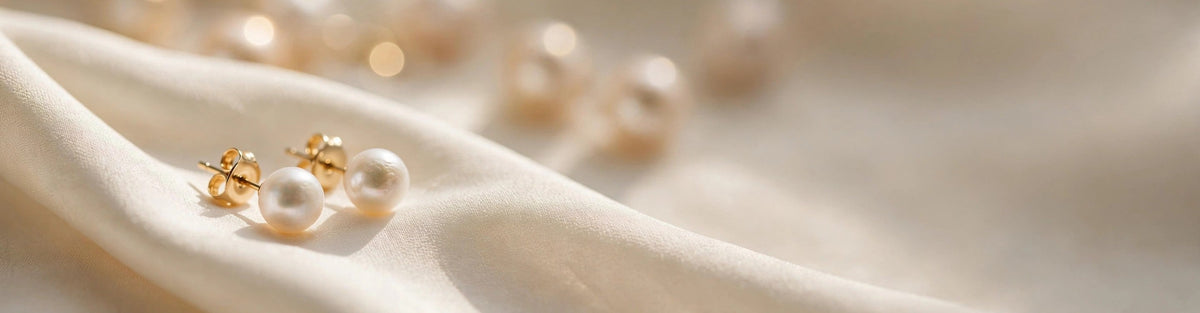
Our handcrafted Essential Pearl Earring — CA$69.99 — pairs lustrous freshwater pearls with quality settings for an everyday stud that works for most sensitive ears. Prefer a little movement? The Freshwater Pearl Drop Earrings — CA$100.00 — pair freshwater pearls with S925 sterling silver in an elegant drop design. Browse the full pearl earrings collection to compare styles side by side.