Real vs Fake Pearls: How to Tell If Pearls Are Genuine
Wondering whether your pearls are the real deal? Imitation pearls have come a long way, so telling the difference isn't always obvious at first glance. The good news: a few simple at-home tests can help you spot genuine pearls with confidence.

At Golden Rose Arts, every pearl we sell is a genuine freshwater pearl, handcrafted into jewellery in our Montreal workshop. Here's how to check your own pieces.
1. The Tooth Test
The tooth test is the classic way to tell real pearls from fake ones:
- Rub the pearl gently against the edge of your front tooth.
- A genuine pearl feels slightly gritty or sandy, thanks to the layers of nacre built up over time.
- An imitation pearl — usually glass, plastic, or shell coated in a synthetic finish — feels perfectly smooth.
Use the edge of the pearl rather than the centre, and wipe the pearl with a soft cloth afterwards.
2. Check the Lustre
Real pearls have a deep, inner glow rather than a flat shine:
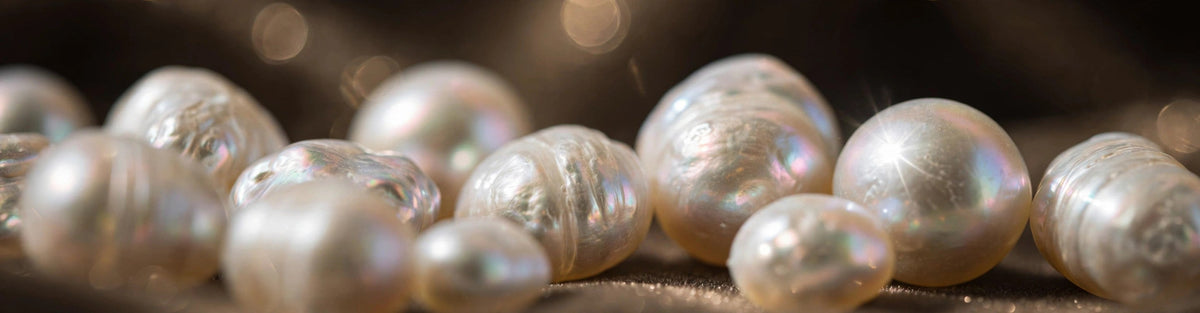
- Genuine pearls show a soft, luminous quality with a hint of iridescence (known as orient).
- Fake pearls often have a uniform, glassy shine that looks almost metallic.
Try comparing your pearls under natural daylight, where the difference in depth of lustre is easiest to see.
3. Look for Surface Imperfections
Real pearls are formed by living molluscs, so no two are exactly alike. Tiny blemishes, slight ripples, or subtle variations in shape are signs of authenticity — not flaws.
- If every pearl on a strand is identical, perfectly round, and flawless, be suspicious.
- Imitation pearls tend to be uniform in size, shape, and colour.
4. Feel the Weight and Temperature
Genuine pearls have substance to them:
- Real pearls feel noticeably heavier than plastic imitations of the same size.
- They also feel cool against your skin at first, then gradually warm up as you hold them.
- Fake pearls often feel room temperature right away.
5. Inspect the Drill Holes
If your pearls are strung, look closely at the drill holes:
- On real pearls, the drill hole is clean and precise, and you can sometimes see the layers of nacre at the edge of the hole.
- On fake pearls, you may see chipped or flaking coating around the hole, revealing the glass or plastic bead underneath.
6. Consider the Price
Genuine pearls take years to form and careful work to harvest, match, and string — so if the price seems too good to be true, it probably is. That said, genuine freshwater pearls are the most accessible real pearls, which is why we work with them at Golden Rose Arts. Browse our necklace collection — including our Essential Pearl Necklace, handcrafted with genuine freshwater pearls in our Montreal workshop.

The Bottom Line
No single test is foolproof, but the tooth test, lustre check, surface inspection, weight, drill holes, and price together give you a reliable picture. When in doubt, buy from a jeweller you trust.
Ready to add genuine pearls to your collection? Explore our freshwater pearl necklaces, each one handmade in Montreal.